
Bangladesh is home to more than 162 million people across just 148,460 square kilometers, making it one of the most densely populated countries in the world. An estimated 77% of that population lives in areas where adequate healthcare access remains difficult. Even so, the country has made real progress over the past decade — notably reducing child mortality and improving both immunization rates and life expectancy. Telemedicine has played a growing role in that progress, and it’s worth understanding how it took shape.
The Early Days of Telemedicine in Bangladesh
Telemedicine services in Bangladesh date back to 1999, when the Swinfen Charitable Trust established the country’s first telemedicine link. In the years since, the sector has taken on increasingly ambitious initiatives to extend healthcare access to underserved communities.
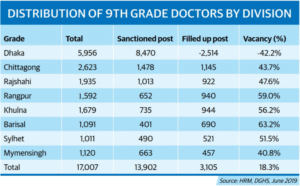
Figure 1: Distribution of doctors across Bangladesh
That shortage isn’t evenly distributed either. An estimated 43% of the country’s doctors are concentrated in Dhaka, leaving other divisions significantly underserved relative to their population and staffing needs. Healthcare access in Bangladesh remains heavily concentrated around the capital — a gap that still needs addressing.
Who’s Building Telemedicine in Bangladesh
Telemedicine has become an increasingly popular way to access medical care in Bangladesh, with a growing number of apps offering everything from consultations to prescriptions — many of them free, at least for initial advice.
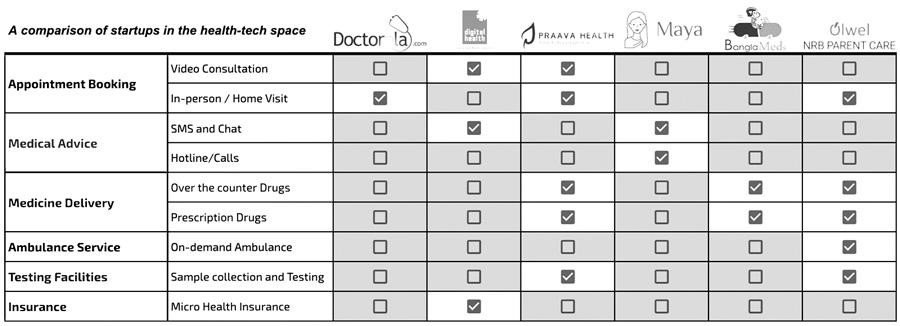
[Figure 2: Comparison of health-tech startups, as of May 2020]
As of mid-2020, six major telemedicine platforms were active in the space, including Doctorola, Praava Health, Maya, Bangla Meds, Digital Health, and Owel — all gaining traction quickly. Pulse Telemedicine, meanwhile, stands out as the country’s first virtual platform offering round-the-clock consultations with doctors.
Many of these platforms currently offer free initial consultations as a way to build trust and reach — and while their overall footprint is still limited, there’s real room for other entrepreneurs to build on what they’ve started and push the sector further.
The Growing Scope of Telemedicine
Telemedicine allows doctors to treat patients in remote areas using telecommunications technology — often at no cost to the patient, and with far less time investment than an in-person visit. That combination has fueled rapid global growth in the telemedicine market over the past five years, with research projecting a compound annual growth rate of over 15.1% through 2027.
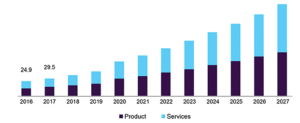
[Figure 3: Compound annual growth rate of the global telemedicine market]
For Bangladesh specifically, that growth trajectory points toward a meaningfully expanded scope for healthcare access — with more patients able to benefit as the technology and adoption both mature.
Telemedicine During COVID-19
Several hospitals across the country have offered high-quality telemedicine services throughout the pandemic. Once COVID-19 reached Bangladesh, the Ministry of Health launched a 24-hour telemedicine service specifically for COVID-19 patients, backed by three of the country’s leading medical associations: the Bangladesh Medical Association (BMA), Swadhinata Chikitsak Parishad (SWACHIP), and the Bangladesh College of Physicians and Surgeons (BCPS).
The service has been active since September, and by all accounts, it’s working well — patients can now reach doctors around the clock. Health Minister Zahid Maleque publicly introduced the initiative through video conferences and commended the associations involved for setting a strong example during the crisis.
Patients can access 24-hour COVID-19 telemedicine support via phone at 01313-791130, 01313-791138, or 01313-791139. Consultations and sample test registration are also available online.
What’s Next for Telemedicine in Bangladesh
The outlook for telemedicine in Bangladesh is genuinely optimistic — it has the potential to reach patients who might otherwise go without care entirely, and in some cases, that access can be life-saving. A number of telemedicine centers are now operating around the clock across the country. A few key factors are driving that momentum forward:
Growth in Internet Access
Internet and smartphone access have expanded significantly across Bangladesh, making telemedicine more accessible for both providers and patients alike.
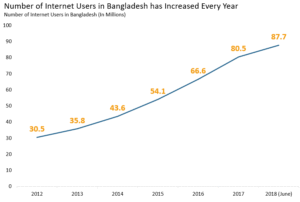
[Figure 4: Internet user growth in Bangladesh, 2012–2018]
Internet usage grew from 30.5 million users in 2012 to 87.7 million by 2018 — nearly tripling in just six years.
Growth in Mobile Phone Usage
Mobile phones have become essential to daily life in Bangladesh, including in rural areas where they’re often the primary way people access services and information. As mobile service has become more affordable and reliable, it’s opened up significant room for telemedicine and telecom-based platforms to grow.
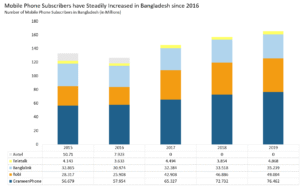
[Figure 5: Mobile phone user growth in Bangladesh since 2016]
That steady rise in mobile adoption has coincided with rapid growth among health-tech startups — a trend likely to accelerate further in the coming years. The government’s own Pulse Telemedicine platform, offering 24/7 doctor consultations, is a clear example of that momentum in action.
Conclusion
Telemedicine offers a faster, more affordable way to access healthcare — and for many patients in Bangladesh, it’s meant getting the care they need within the hour, rather than not at all. Hospitals and private health organizations across Dhaka and beyond continue to build out their own telemedicine offerings, and during the COVID-19 pandemic in particular, the sector has played a genuinely vital role for the country’s healthcare system.
Author: Md Rashid Munasib Islam
Skills & Entrepreneurship, Junction Bangladesh