
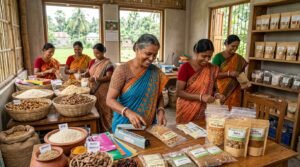
Salma has experience, confidence, and a clear idea. She knows which products rural families can make, where raw materials are available, and what customers may want. She also hopes to create work for other women in her village. But she needs a small processing machine, proper packaging, a workplace, and money to buy her first supply of raw materials. Her dream has finally found its moment, but it still needs financing.
This is where many entrepreneurial journeys in Bangladesh slow down or stop. An idea may be creative and commercially promising, but it cannot grow without capital. Entrepreneurs need money to buy equipment, develop products, hire workers, reach customers, and continue operating until the business begins to earn. For women like Salma, financing is not simply money. It is the bridge between years of dreaming and the courage to begin.
Banks have traditionally been the main force behind formal entrepreneurship financing in Bangladesh. Other sources such as venture capital, angel investment, and start-up investment remain limited and are mostly available to technology businesses or entrepreneurs in major cities. Rural entrepreneurs have even fewer choices. They usually depend on personal savings, relatives, microcredit, or bank loans. Personal savings may be too small, while informal loans can be expensive and risky. For most serious business plans, banks remain the most important door.
Bangladesh now has start-up funds, refinancing facilities, credit-guarantee programmes, and special financing schemes for Cottage, Micro, Small, and Medium Enterprises. Women entrepreneurs also receive attention through dedicated SME loan products and service desks. In principle, these initiatives can support women who have practical ideas but little property, limited savings, or no previous borrowing history. Smaller loans, affordable interest rates, longer repayment periods, and reduced collateral requirements can help rural women start food-processing businesses, farms, tailoring centres, handicraft enterprises, shops, and online ventures.
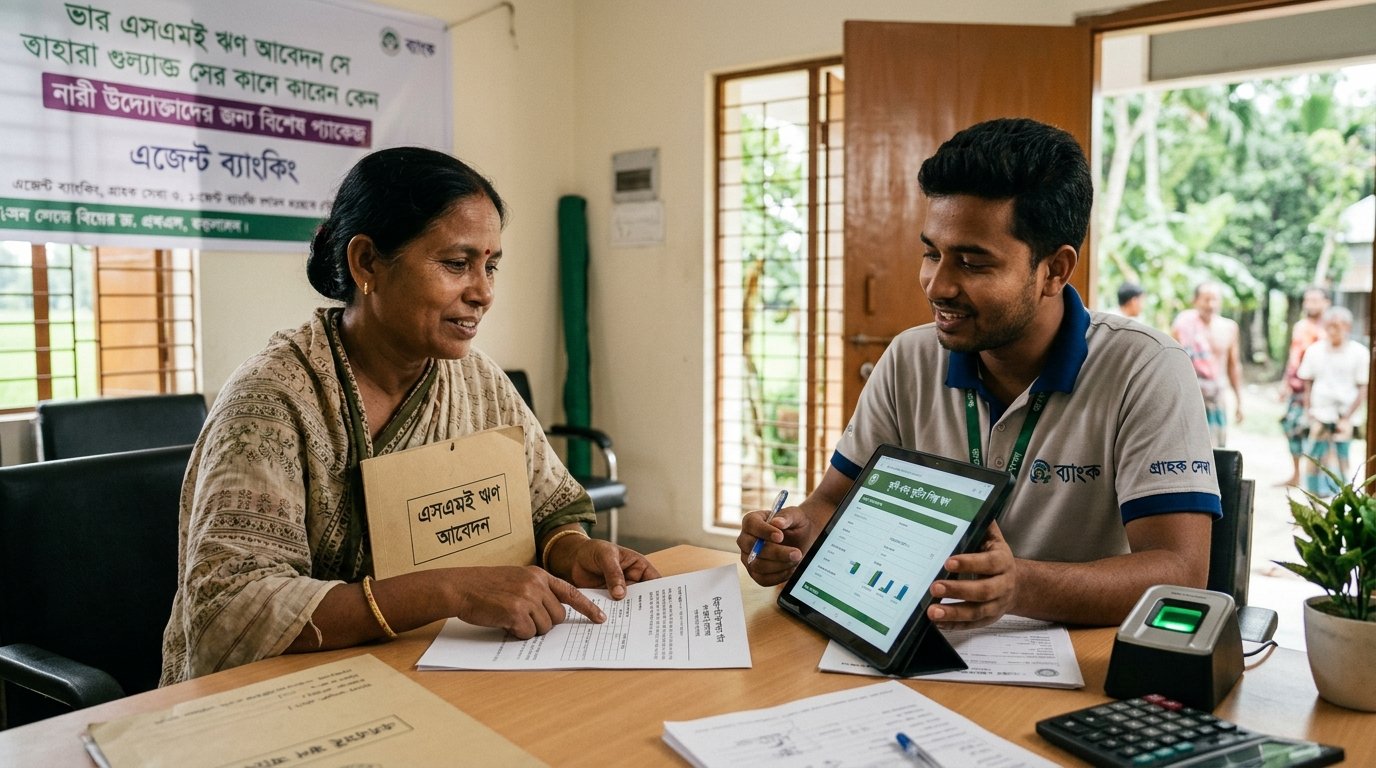
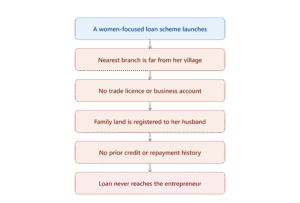
Yet announcing a fund is easier than making it reach the right entrepreneur. Salma may hear that a special loan is available, but she may not know where to apply or what documents she needs. The nearest branch may be far from her village. She may not have a formal business account, trade licence, tax record, or written business plan. A bank officer may ask for land as security, although the family’s land is registered in her husband’s or another relative’s name. A programme created for women can therefore remain beyond the reach of the women it was meant to support.
Banks also face genuine difficulties in offering these loans. Small loans require customer verification, paperwork, monitoring, and collection, often at a cost similar to that of larger loans. Rural businesses may have seasonal income and incomplete financial records, making risk difficult to measure. New entrepreneurs have no repayment history, while some special loan programmes may be misused by applicants seeking cheap money without a serious business purpose. At a time when banks are already dealing with defaulted loans and financial pressure, many become cautious and prefer established borrowers with property.
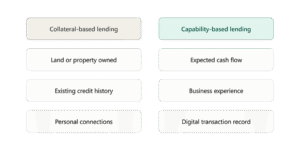
These concerns are understandable, but relying mainly on collateral creates another problem. Women are particularly disadvantaged because property ownership is still largely held by men. A woman may have managed a family business for years and understand its customers better than anyone, yet the bank may see only that she does not own land. In such cases, the system measures security but misses ability.
Bank financing must therefore become more practical and inclusive. Banks should assess the expected cash flow of a business, the entrepreneur’s experience, customer demand, savings behaviour, and digital transaction history, not only the value of land or buildings. Credit-guarantee programmes should protect banks when they lend to promising borrowers who lack collateral. Agent banking, mobile services, and local help desks can bring information and applications closer to rural women. The process should be simple enough for a first-time entrepreneur to understand without depending on personal connections.
Financing alone, however, will not solve every problem. A new entrepreneur may also need help with bookkeeping, licensing, product quality, packaging, marketing, digital payments, and access to buyers. Banks can work with government agencies, SME organisations, chambers of commerce, training institutions, and local women’s groups to provide these services. A loan becomes far more useful when it comes with the knowledge and market support needed to use it well. This also lowers the risk for the bank because a better-prepared entrepreneur is more likely to succeed and repay.
Bangladesh is rich in people like Salma Begum i.e. people with ideas shaped by years of work, observation, and sacrifice. Some are young graduates, while others discover their entrepreneurial moment much later in life. Their dreams should not be rejected simply because they live outside a major city, lack inherited property, or are applying for a business loan for the first time.
To strengthen SMEs and entrepreneurship, Bangladesh must reshape both bank financing and the initiatives connected with it. Start-up funds must become easier to access, women-focused financing must reflect the realities of rural life, and banks must learn to recognise business potential beyond collateral. Stronger governance within banks is equally necessary so that funds reach productive entrepreneurs rather than powerful defaulters. When finance, training, technology, guarantees, and market access work together, banks can become true partners in enterprise. Then Salma’s long-held idea and thousands of dreams like hers can finally move from the family courtyard into the wider economy.
Author: Dr. Shah Md. Ahsan Habib; Professor, BIBM & Chairman, Dnet